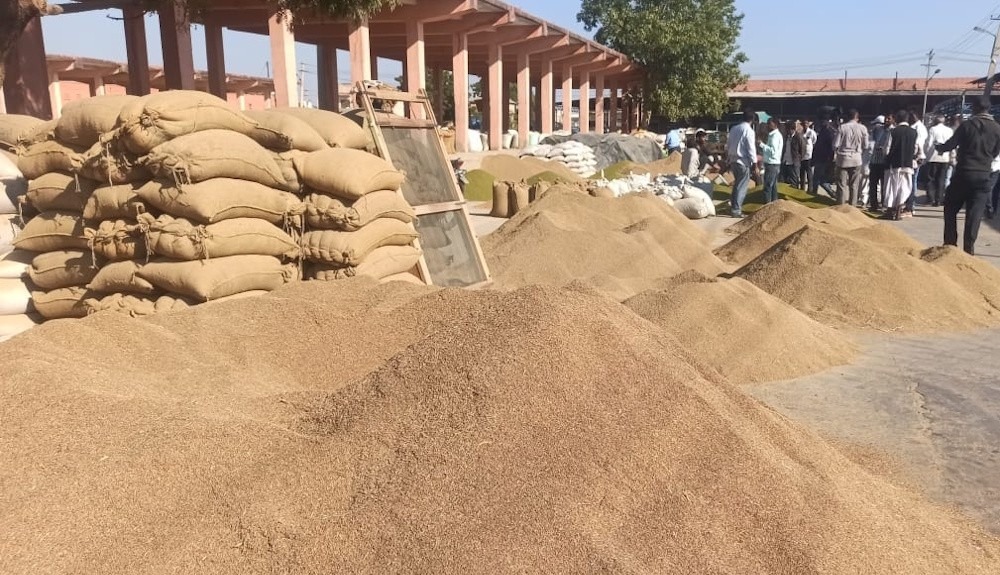
Jeera settled higher by 0.50% at Rs 20,905, as the tightening availability of premium-quality bold seeds bolstered prices, with export-grade high-purity supplies diminishing more rapidly than the overall physical availability. Daily arrivals at major markets like Unjha in Gujarat and Rajasthan have decreased markedly, while blight disease in critical areas of Gujarat has diminished both the quality of crops and the quantities available for harvest. However, the upside remained constrained as farmers actively liquidated stocks to generate cash for Kharif sowing, while favourable weather conditions in Northwest India facilitated quicker harvesting and drying, thereby expediting deliveries.
Increasing NCDEX warehouse stocks have diminished the immediacy for spot procurement, as major industrial spice grinders exercise caution and opt to await more favourable pricing. Domestic processors and stockists are engaging in hand-to-mouth purchasing rather than pursuing aggressive forward coverage. This approach sustains demand while averting panic buying. Enhanced production expectations in Turkey and Syria are exerting pressure on Indian export premiums, even as buyers from Europe and North America have resumed interest in residue-compliant and high-specification lots. Domestic cumin production is projected to be between 90 and 92 lakh bags this season, a decline from last year’s figure of 1.10 crore bags.
The output from Gujarat is estimated to be between 42 and 45 lakh bags, while Rajasthan’s production is anticipated to range from 48 to 50 lakh bags. Outside India, China’s production is projected to be merely 70,000–80,000 tonnes as a result of unfavourable weather conditions. In contrast, Syria, Turkey, and Afghanistan are anticipated to yield approximately 9,000–10,000 tonnes, 10,000–11,000 tonnes, and 10,000–12,000 tonnes, respectively. Export demand exhibits a mixed landscape, as evidenced by India’s jeera exports, which have decreased by 34% year-on-year to 10,713 tonnes in June 2026. Furthermore, the cumulative exports for the April-June period have contracted by 25%, totalling 44,144 tonnes.
However, cumulative exports to Singapore, Oman, and Argentina experienced significant increases, rising by 1,040%, 265%, and 333% respectively. In Unjha, spot prices concluded at Rs 20,518.05, reflecting a decrease of 0.63%. Technically, the market continues to experience short covering, as evidenced by a 2.34% decline in open interest to 8,526, alongside a price increase of Rs 105. Jeera has established a support level at Rs 20,760. A sustained breach beneath this threshold may lead to a test of Rs 20,620. On the upside, resistance is positioned at Rs 20,990, and a decisive move above this threshold could propel prices toward Rs 21,080.