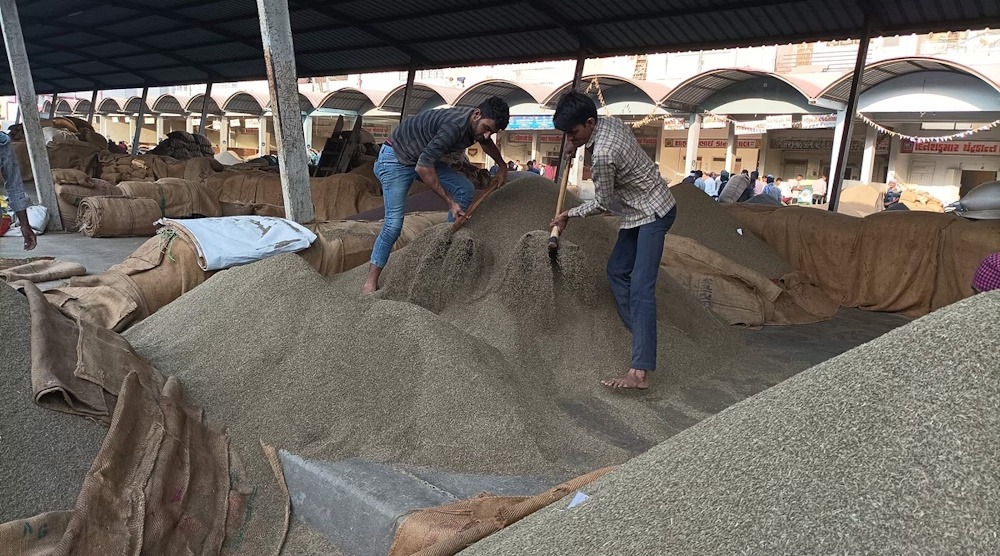
Jeera concluded the trading session with a 0.19% increase, reaching Rs 21,605, as the supply of premium-quality bold seeds diminished swiftly. This scarcity is particularly evident in export-grade, high-purity varieties, even as the overall physical availability remains stable. Daily arrivals in significant markets like Unjha in Gujarat and Rajasthan have begun to decline, which is bolstering prices. Concurrently, outbreaks of blight disease in crucial areas of Gujarat have impacted both the quality of the crop and the quantities available for harvest. However, gains remained constrained as farmers persisted in liquidating stocks to secure immediate cash flow in anticipation of the forthcoming season.
Favourable weather conditions in Northwest India facilitated swift harvesting and drying processes, thereby expediting deliveries. Concurrently, the increase in NCDEX warehouse stocks diminished the urgency felt by spot buyers. Large industrial spice grinders have taken a prudent stance, curtailing bulk acquisitions and depending on a hand-to-mouth purchasing strategy. Geopolitical instability in the Middle East has impacted logistics and demand from conventional buyers; however, there has been a resurgence of interest from European and North American buyers for residue-compliant and high-specification lots. Enhancements in production forecasts for Turkey and Syria are exerting downward pressure on Indian export premiums.
Current estimates indicate Indian jeera production at 90-92 lakh bags, a decrease from 1.10 crore bags last year, with Gujarat production estimated at 42-45 lakh bags and Rajasthan at 48-50 lakh bags. China’s production is projected at 70,000-80,000 tonnes. Syria, Turkey, and Afghanistan are expected to produce 9,000-10,000 tonnes, 10,000-11,000 tonnes, and 10,000-12,000 tonnes, respectively. India’s jeera exports experienced a significant decline of 34% year-on-year, totalling 10,713 tonnes in June 2026. Additionally, exports for the April-June period decreased by 25%, amounting to 44,144 tonnes.
Singapore, Oman, and Argentina experienced robust growth; however, this was inadequate to counterbalance the overall downturn. Unjha spot prices concluded at Rs 20,994.55, reflecting a decline of 0.53%. Technically, jeera is experiencing fresh buying, as indicated by a 11.41% increase in open interest to 7,179, alongside a price gain of Rs 40. Support is positioned at Rs 21,420, and a breach beneath this level may reveal Rs 21,230. Resistance is observed at Rs 21,790, whereas a consistent movement above this level may drive prices toward Rs 21,970.