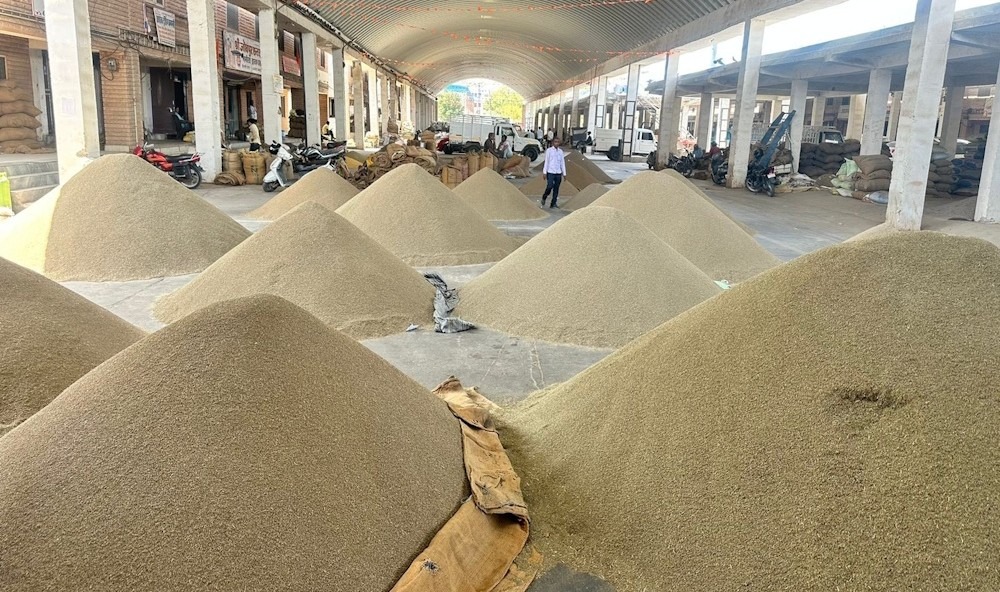
Jeera settled 0.38% lower at Rs.20,735, influenced by aggressive farmer selling as growers liquidated stocks to generate cash for Kharif sowing. Favourable weather conditions in northwest India facilitated the swift progression of harvesting and drying processes, leading to an increase in arrivals. Concurrently, the rise in NCDEX warehouse stocks diminished the urgency for immediate spot procurement. Large industrial spice grinders exhibited a cautious stance regarding bulk purchases, opting to bide their time for more favourable pricing. Concurrently, enhanced production forecasts in Turkey and Syria exerted additional pressure on Indian export premiums. However, the downside remained constrained by the tightening availability of premium-quality bold seeds, as arrivals at Unjha and Rajasthan began to decline significantly.
Blight outbreaks in certain regions of Gujarat have adversely impacted both crop quality and the volumes available for harvest. Domestic processors and stockists are maintaining hand-to-mouth buying rather than aggressive forward coverage, keeping demand steady but limiting strong upside momentum. Geopolitical tensions in the Middle East persist in influencing logistics and demand from conventional buyers, whereas diminished demand from China and West Asia has led to a decline in Indian export activity. European and North American buyers have selectively re-entered the market for residue-compliant and high-specification lots. India’s jeera production is estimated at 90–92 lakh bags this season, down from 1.10 crore bags last year, with Gujarat production estimated at 42–45 lakh bags and Rajasthan at 48–50 lakh bags.
China’s production estimate has been adjusted downward to 70,000–80,000 tonnes as a result of unfavourable weather conditions. In contrast, Syria, Turkey, and Afghanistan are projected to yield approximately 9,000–10,000 tonnes, 10,000–11,000 tonnes, and 10,000–12,000 tonnes, respectively. India’s jeera exports experienced a significant decline of 34% year-on-year, totalling 10,713 tonnes in June. Additionally, exports for the April to June period decreased by 25%, amounting to 44,144 tonnes. Unjha spot prices experienced a decrease of 0.37%, settling at Rs.20,606.3.
Technically, jeera is experiencing long liquidation, evidenced by a 1.72% decline in open interest to 9,255, alongside a price decrease of Rs.80. Support is placed at Rs.20,540, and a break below could test Rs.20,350. Resistance is observed at Rs.20,900, whereas a sustained movement above this level could propel prices toward Rs.21,070. Overall, the near-term outlook appears prudent as ample supplies and subdued exports counterbalance apprehensions regarding diminished production and restricted availability of premium-quality goods.