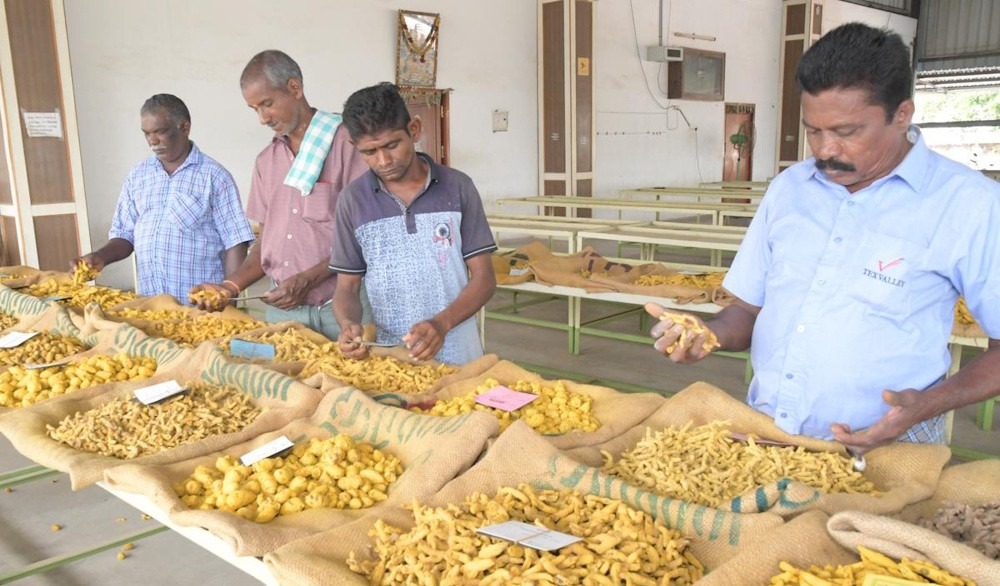
Turmeric prices experienced a slight decline of -0.14%, settling at Rs 15,994. This movement was influenced by heightened arrivals in major mandis, including Nizamabad, Erode, and Hingoli, leading to a temporary oversupply in the market. Farmers expedited the liquidation of stock to address liquidity requirements in anticipation of Kharif sowing, while increased arrivals of moisture-laden, late-harvest crops resulted in a depreciation of average-quality produce. In spite of immediate challenges, the foundational elements continue to provide support.
Arrivals in certain regions of Maharashtra and Telangana remain below seasonal norms, suggesting a constrained supply environment. Quality concerns, particularly rhizome rot in low-lying areas, have diminished the supply of premium “Double Polished” varieties. In contrast, high-grade Salem Fali maintains robust premiums, approaching Rs 20,000 per quintal. Stockists and farmers in significant regions such as Sangli and Nizamabad are restraining supplies, expecting to achieve greater price realization.
Furthermore, carry-forward stocks are projected to be approximately 15 lakh bags, which is considerably reduced compared to the previous season, thereby constraining overall availability. Export demand exhibits stability, as shipments from April to February increased by 1% year-on-year, totaling 163,336 tonnes. In contrast, imports experienced a significant decline of 40%, indicating a diminished dependence on foreign supply. Support is also observed from the European Union’s demand for IPM-certified turmeric and robust purchasing activity from Bangladesh.
From a technical perspective, the market is experiencing long liquidation, as evidenced by a decline in open interest of -3.72% to 16,060, which suggests position unwinding. Immediate support is identified at Rs 15,892, with a breach below likely to test Rs 15,792. On the upside, resistance is positioned at Rs 16,156, and a sustained movement above this threshold could drive prices toward Rs 16,320.