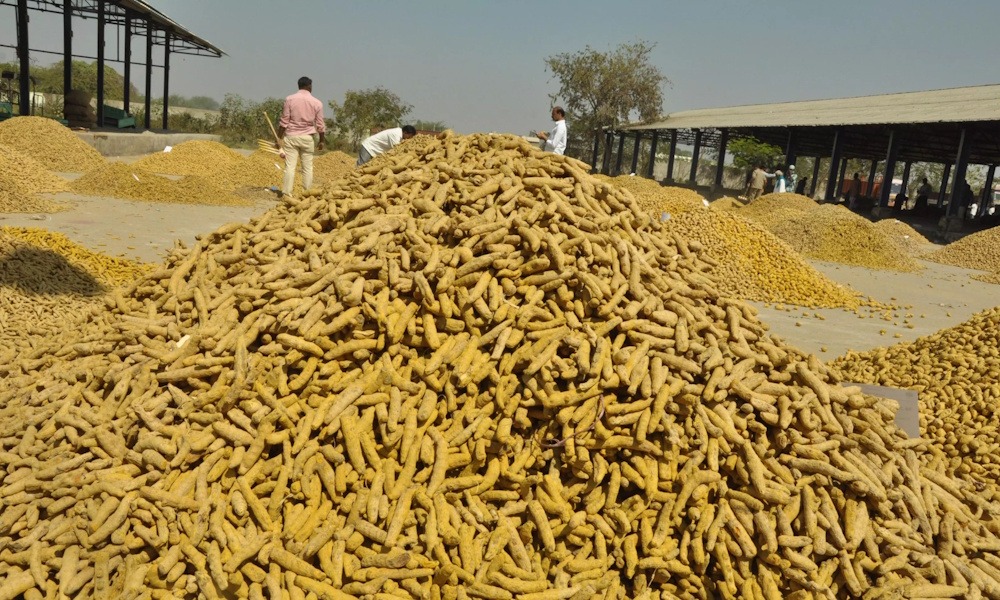
Turmeric prices experienced a decline of 2.62%, concluding at Rs 16,326. This downturn is attributed to anticipations of increased acreage, bolstered by favorable rainfall during the current sowing season. India’s turmeric crop for the 2026 harvest is developing with an expansion in cultivated area; however, the overall growth in supply is anticipated to be moderate due to weather irregularities and localized disease challenges that counterbalance the increases in acreage.
Unseasonal heavy rainfall during August–September led to waterlogging and disease in certain regions of Marathwada, affecting nearly 15% of the area and causing yield losses of 15–20% in the impacted pockets. The yields in Maharashtra, Andhra Pradesh, and Karnataka experienced significant repercussions. For the 2025–26 season, turmeric acreage is projected to reach 3.02 lakh hectares, reflecting a year-on-year increase of 4%, while fresh production is anticipated to be 11.41 lakh tonnes.
Dried turmeric output is projected at 90 lakh bags, an increase from 82.5 lakh bags in the previous season; however, reduced carry-forward stocks constrain the growth in availability. Demand continues to be robust, bolstered by vigorous domestic consumption and consistent exports to Europe and the United States. During the period from April to November 2025, turmeric exports experienced an increase of 4.88%, whereas imports saw a significant decline of 44.5%, thereby enhancing the demand-supply equilibrium. In the Nizamabad spot market, prices increased by 0.31% to Rs 16,508.4.
From a technical perspective, the market is experiencing long liquidation, evidenced by a 3.63% decline in open interest. Support is identified at Rs 16,120; a decline below this level may lead to a test of Rs 15,912. Conversely, resistance is established at Rs 16,648, with a breakout potentially driving prices up to Rs 16,968.