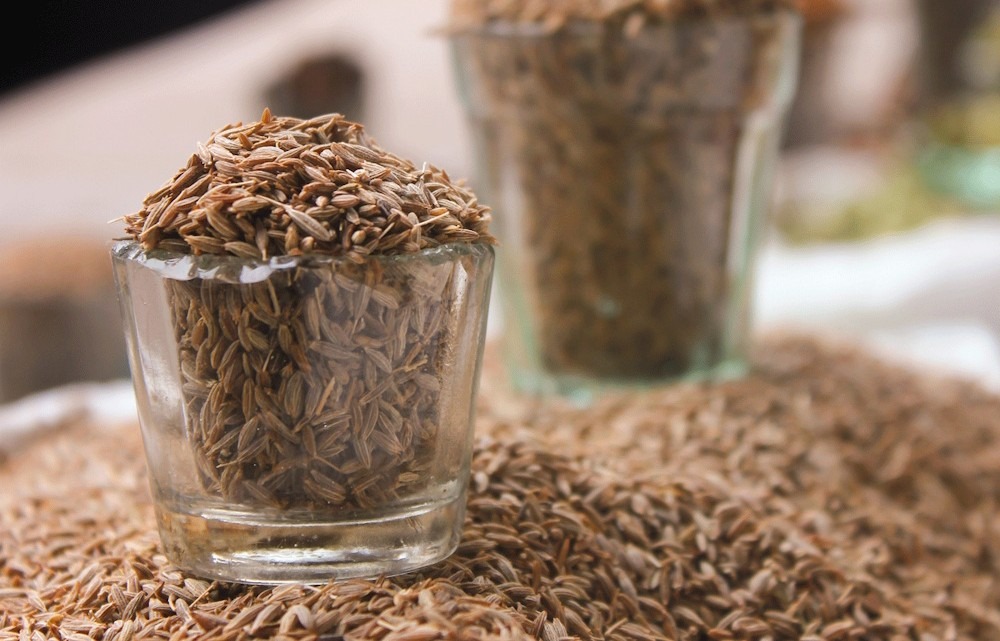
Even if overall physical supplies are still pretty stable, Jeera closed slightly higher by 0.07% at Rs 21,455 thanks to a quick tightening of the supply of premium-quality bold and export-grade high-purity seeds. Daily arrivals at major markets, including Unjha in Gujarat and those in Rajasthan, have begun to decrease. Concurrently, outbreaks of blight in significant areas of Gujarat have negatively impacted both the quality of crops and the volumes available for harvest. Demand persists at a steady yet cautious pace, as conventional Middle Eastern purchasers predominantly engage in hand-to-mouth buying practices, influenced by geopolitical and logistical uncertainties.
European and North American buyers have selectively re-entered the market for residue-compliant and high-specification lots, thereby bolstering support for quality segments.Nonetheless, the potential for price increases is constrained by proactive selling from farmers seeking liquidity, accelerated harvesting and drying processes attributed to favourable weather conditions, increasing stocks in NCDEX warehouses, and restricted bulk purchases by industrial spice grinders. Enhanced production outlooks in Turkey and Syria are exerting pressure on Indian export premiums. Domestic production is projected to be between 90 and 92 lakh bags this season, a decline from last year’s figure of 1.10 crore bags.
Specifically, production in Gujarat is estimated at 42 to 45 lakh bags, while Rajasthan’s output is anticipated to be between 48 and 50 lakh bags. China’s production is projected to be lower at 70–80 thousand tonnes as a result of adverse weather conditions. In contrast, Syria, Turkey, and Afghanistan are anticipated to produce approximately 9–10 thousand, 10–11 thousand, and 10–12 thousand tonnes, respectively. India’s jeera exports experienced a significant decline of 34% year-on-year, totalling 10,713 tonnes in June 2026. Furthermore, exports for the April-June period decreased by 25%, amounting to 44,144 tonnes. Despite robust growth in exports to Singapore, Oman, and Argentina, these gains were inadequate to counterbalance the overall decline. Unjha spot prices concluded at Rs 21,085.85, reflecting a decline of 0.33%.
Technically, the market is experiencing short covering, evidenced by a 1.69% decline in open interest to 5,766 contracts, alongside a price increase of Rs 15, suggesting the covering of existing short positions. Jeera has established a support level at Rs 21,370, and a decline beneath this threshold may lead to a test of Rs 21,280. On the upside, resistance is positioned at Rs 21,540, and a sustained movement above this threshold may result in a test of Rs 21,620.