
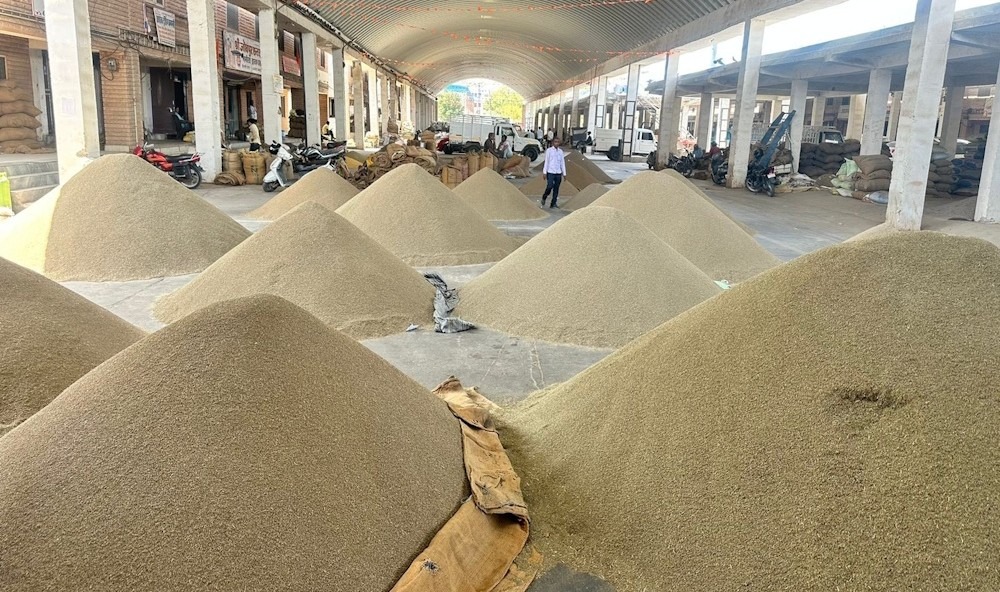
Jeera prices increased, closing up by 0.79% at Rs 22,385, as weather-related challenges and postponed sowing persisted in bolstering market sentiment. Sowing progress in Gujarat is markedly lagging compared to the previous year, with the area as of 29 December 2025 recorded at 3.99 lakh hectares, reflecting a decline of 14.2% year-on-year, attributed to irregular rainfall that has hindered field preparation. This has led to significantly reduced arrivals at Unjha, where high-quality cumin is fetching premium prices, even as the spot market there concluded slightly lower at Rs 21,963.2. Fundamentally, the potential for upside is constrained by ample old-crop inventories and lackluster export demand.
It is estimated that farmers are in possession of nearly 20 lakh bags, with only 3–4 lakh bags expected to be traded, resulting in a substantial carry-forward stock. Interest in exports from Gulf countries and China has seen a modest improvement, yet it remains sensitive to pricing fluctuations. Meanwhile, overall foreign demand persists in a state of weakness, even in the face of supply disruptions occurring in Syria, Turkey, and Afghanistan, alongside diminished output expectations in China.
Jeera exports from April to October 2025 experienced a year-on-year decline of 13.21%, indicating subdued demand from international markets. Production estimates for the current season have been adjusted downward to 90–92 lakh bags, compared to 1.10 crore bags in the previous year, a change attributed to decreased sowing activities. The reduction of the GST rate to 5% is expected to bolster demand in the FMCG sector.
From a technical perspective, the market is experiencing short covering, as evidenced by a 1.14% decrease in open interest at 4,410, coupled with a price increase of Rs 175. Support is identified at Rs 22,060, with additional downside potential at Rs 21,720. Resistance is established at Rs 22,610, and a breakout may challenge Rs 22,820.