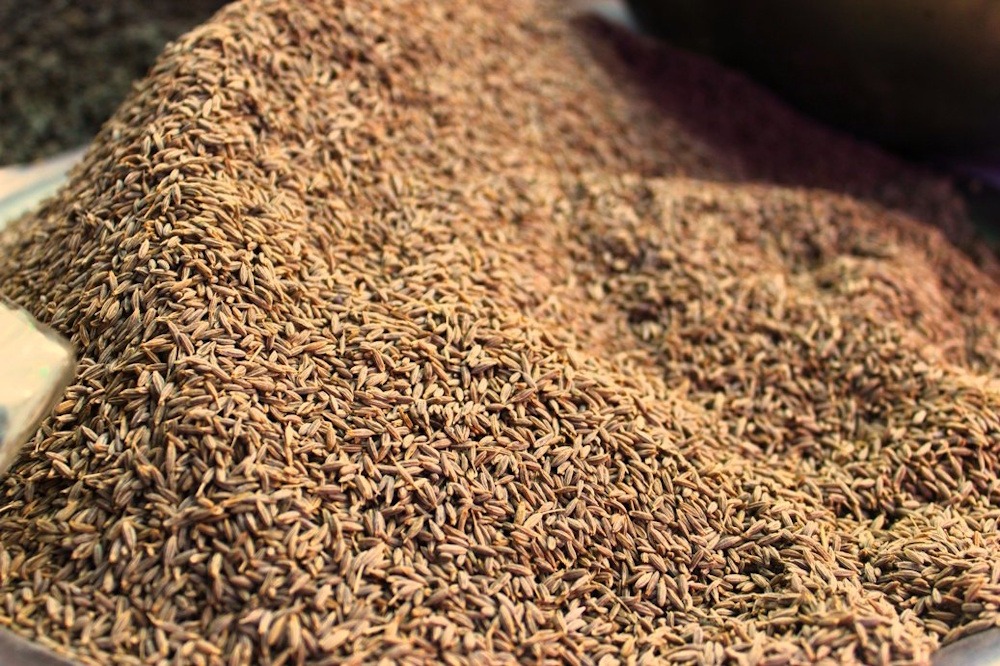
Jeera prices witnessed a decrease of 3.66%, concluding at Rs. 27,530. This decrease can be attributed to profit booking following a recent rally, which was bolstered by increasing export demand alongside tightening domestic and global supplies. Concerns regarding disruptions in rainfall associated with El Niño and restricted water availability in crucial cumin-growing areas have heightened uncertainty surrounding forthcoming sowing and production forecasts. Gujarat has officially designated Jamnagar, Devbhumi Dwarka, Porbandar, and Kutch as districts experiencing scarcity, highlighting considerable concerns about agricultural conditions. Limited Syrian supplies have strengthened demand for Indian cumin, whereas China’s expanding domestic cultivation has reduced its reliance on imports.
However, expectations of stable-to-higher sowing acreage in Saurashtra and western Rajasthan, along with improved weather conditions and expedited harvesting in certain areas, limited further upside. Farmers are liquidating stocks to generate cash flow in anticipation of the upcoming sowing season, while processors and millers are limiting procurement to immediate needs in the context of elevated prices. Domestic cumin production is anticipated to range from 90 to 92 lakh bags, reflecting a decrease from the previous year’s total of 1.10 crore bags. This year’s output comprises an estimated 42 to 45 lakh bags from Gujarat and 48 to 50 lakh bags from Rajasthan.
International production estimates suggest that China will produce between 70,000 and 80,000 tonnes, while Syria’s output is projected at 9,000 to 10,000 tonnes. Turkey is expected to yield 10,000 to 11,000 tonnes, and Afghanistan’s production is anticipated to be in the range of 10,000 to 12,000 tonnes. Export data displayed persistent weakness, with India’s cumin exports for September 2026 declining by 27.4% year-on-year, amounting to 12,447 tonnes. This figure also represents a decline of 16.1% compared to the five-year September average. Cumulative exports during April–September FY 2026-27 saw a reduction of 24.6%, reaching a total of 82,935 tonnes. In contrast, exports from October 2025 to September 2026 fell by 19.7%, totalling 169,793 tonnes.
Export value declined by 29.5% to $429 million, while average realisations decreased by 12.2% to $2,527 per tonne. In Unjha, spot prices concluded at Rs. 28,204.75, indicating a decrease of 0.35%. Technically, the market is undergoing a phase of long unwinding, as indicated by a 0.11% reduction in open interest to 10,965 contracts, which aligns with a price drop of Rs. 1,045. Jeera demonstrates immediate support at Rs. 27,130; a drop beneath this threshold may lead to prices approaching Rs. 26,730. Resistance is established at Rs. 28,260, and a sustained movement above this threshold may propel prices toward Rs. 28,990.