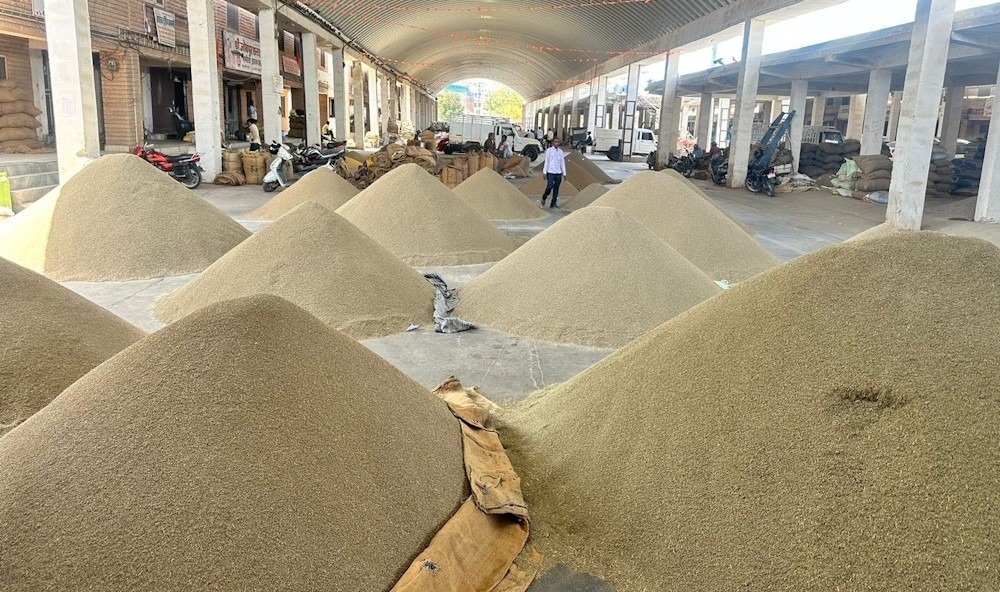
Jeera concluded with an increase of 0.78% at Rs 25,720, bolstered by a decrease in the availability of premium-quality bold seeds, diminished sowing prospects, and anticipations of enhanced export demand. Farmers have been strategically withholding stocks, expecting improved prices as the October sowing period approaches. Concurrently, diminishing arrivals in key trading hubs like Unjha and Rajasthan have constrained the availability of export-quality cumin. Estimates indicate that India’s jeera production may decrease to 90-92 lakh bags this season, down from 1.10 crore bags in the previous year. Production in Gujarat is anticipated to be between 42-45 lakh bags, while Rajasthan’s output is expected to range from 48-50 lakh bags.
Adverse weather conditions have resulted in a downward revision of China’s production estimates to a range of 70,000-80,000 tonnes. In contrast, Syria, Turkey, and Afghanistan are projected to yield approximately 9,000-10,000 tonnes, 10,000-11,000 tonnes, and 10,000-12,000 tonnes, respectively. However, the potential for upward movement remained constrained by farmers liquidating their holdings to secure cash in anticipation of the new season, increasing warehouse inventories, and the prudent purchasing strategies employed by industrial spice processors. Enhanced production forecasts in Turkey and Syria may exert downward pressure on Indian export premiums, as ongoing geopolitical instability in the Middle East persists in disrupting conventional trade patterns.
India’s jeera exports experienced a decline of 19.7% year on year, totalling 11,667 tonnes in August 2026, down from 14,532 tonnes in the same month the previous year. Cumulative exports during April-August declined to 65,128 tonnes, a decrease from 87,558 tonnes in the same period last year. Shipments to the United States experienced a notable increase of 16.5%, reaching 1,517 tonnes. Concurrently, exports to Singapore surged to 633 tonnes, and those to Mexico rose to 373 tonnes. In contrast, shipments to the United Arab Emirates experienced a significant decline of 81.6%, totalling 453 tonnes, while exports to Bangladesh decreased by 45.8%, amounting to 569 tonnes.
In Unjha, a significant spot market, prices rose by 0.47% to Rs 25,925.65. Technically, the market is experiencing short covering, as evidenced by a 1.94% decline in open interest to 8,328 contracts, coinciding with a price increase of Rs 200. Jeera exhibits support at Rs 25,290; a decline below this threshold may lead prices to test Rs 24,870. Conversely, resistance is identified at Rs 26,000, and a sustained movement above this level could propel prices toward Rs 26,280.