
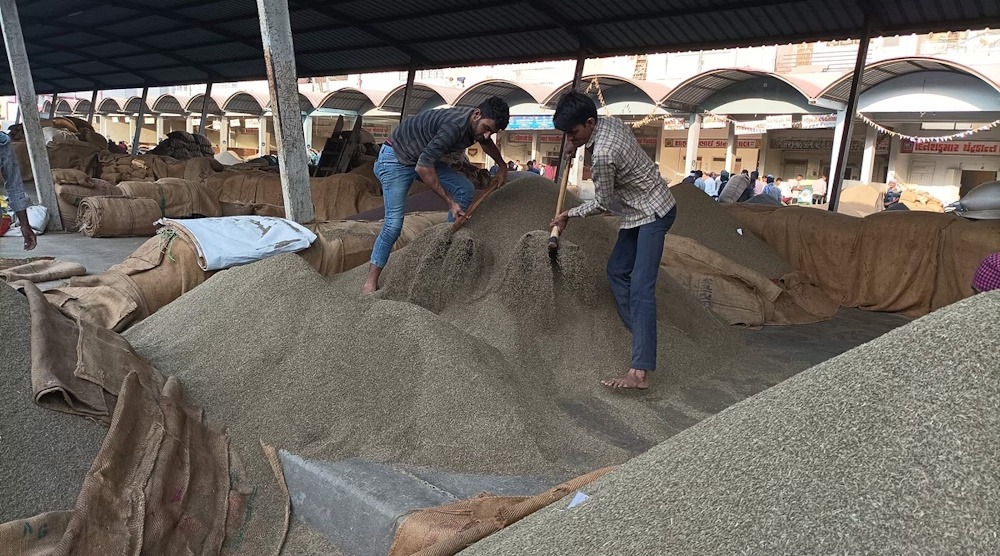
Jeera prices experienced a decline, closing at Rs 21,905, reflecting a decrease of 0.86%, primarily attributed to the influx of the new crop in significant mandis. As arrivals start to accelerate in March, the market is experiencing pressure due to enhanced supplies and comparatively subdued export demand. Comfortable stock levels, coupled with subdued buying interest from overseas markets, have contributed to a dampened sentiment. Nonetheless, the potential drawbacks seem constrained.
Weather concerns are reemerging, as increasing temperatures in North Gujarat elevate the risk of heat stress on late-sown crops. This may influence seed development and reduce yield expectations. Overall production is anticipated to decrease by approximately 5% this year, with Gujarat expected to experience a significant decline attributed to reduced acreage and yields, whereas Rajasthan might mitigate some losses through improved output. Demand trends exhibit a heterogeneous pattern.
Despite the sustained interest in premium-quality jeera, the overall demand for exports remains subdued. In January, exports experienced a significant decline of 48% year-on-year, with cumulative shipments also reflecting a downturn. This trend underscores the sluggishness of global demand, even in the context of supply disruptions affecting other producing nations.
From a technical perspective, the market is experiencing long liquidation, evidenced by a 4.76% decrease in open interest to 6,243 lots, coinciding with a price decline of Rs 190. Immediate support is identified at Rs 21,800, with a breach below possibly challenging Rs 21,680. Resistance is established at Rs 22,060, and a breach of this threshold may propel prices toward Rs 22,200.