
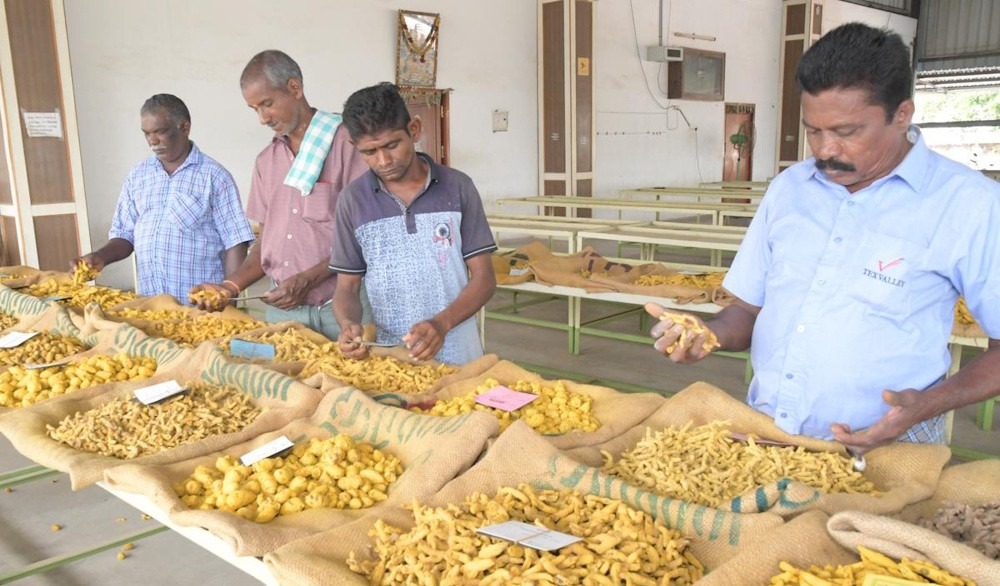
Turmeric prices experienced a modest increase in the previous session, closing 0.92% higher at Rs 14,740, buoyed by below-average arrivals and consistent domestic and export demand. Market sentiment has been bolstered by reports indicating that both farmers and stockists have diminished their holdings, thereby constraining near-term supplies and providing support to prices in anticipation of the new crop arrivals. Weather-related disruptions have indeed contributed to the situation.
Key producing states, including Maharashtra, Andhra Pradesh, and Karnataka, faced yield losses attributed to excessive rainfall and localized disease pressure. Unseasonal precipitation in the period of August to September impacted approximately 15% of the agricultural area in certain regions of Marathwada, leading to yield reductions of nearly 15–20% in specific areas. Notwithstanding this, an increase in acreage is anticipated to elevate India’s turmeric production in 2026 to approximately 90 lakh bags, in contrast to 82.5 lakh bags from the previous season.
The total acreage for the 2025–26 season is projected to reach 3.02 lakh hectares, reflecting an increase of approximately 4% compared to the previous year, with fresh production anticipated at 11.41 lakh tonnes. Export demand continues to be robust, especially from Europe and the United States. The Spices Board of India reports that turmeric exports from April to December 2025 increased by 3.99% to 142,386 tonnes, whereas imports experienced a significant decline of 41.54%, suggesting a reduction in domestic availability.
From a technical perspective, the market is experiencing short covering, as evidenced by a 0.74% decrease in open interest to 18,225, accompanied by a price increase of Rs 134. Turmeric exhibits immediate support at Rs 14,398, with additional downside risks potentially probing Rs 14,056. On the upside, resistance is observed at Rs 15,136, and a breach above this threshold could propel prices toward Rs 15,532.